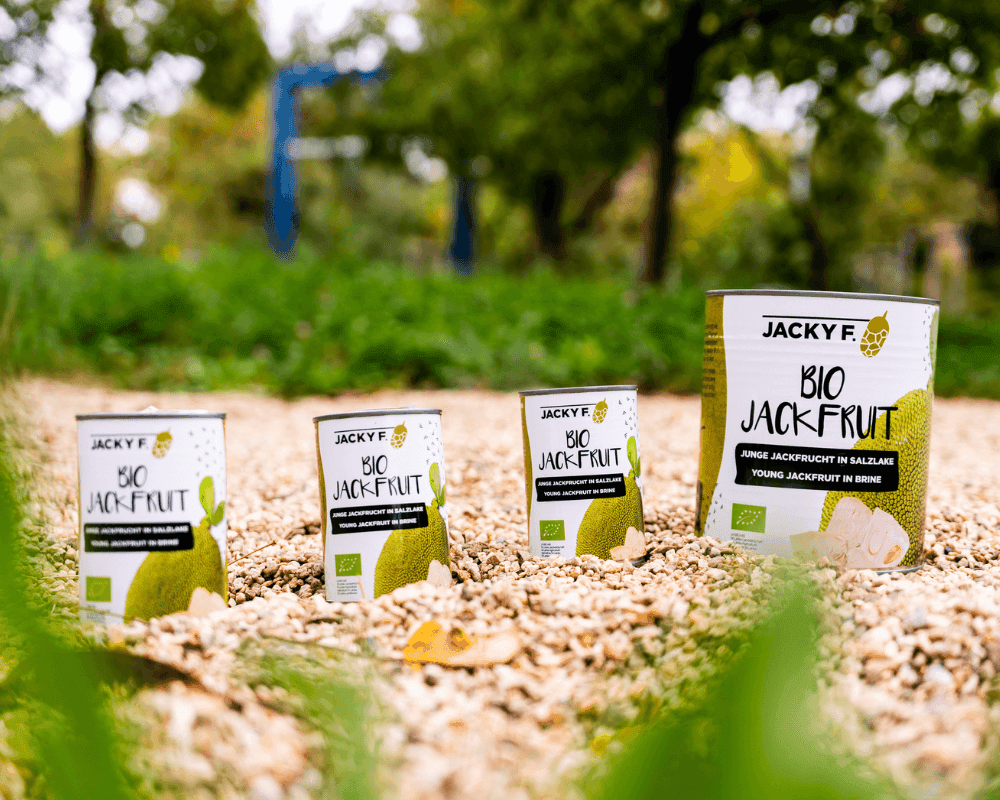
How Does Jackfruit Grow? Inside the World’s Largest Fruit’s Sustainable Farms
Jackfruit grows on tall trees in the tropics, mainly in Sri Lanka and Indonesia. It needs only rain, warmth and space, with no watering or pesticides. Trees give their first fruit after 3–5 years, and jackfruit makes just 0.9 kg of CO₂ per kg.
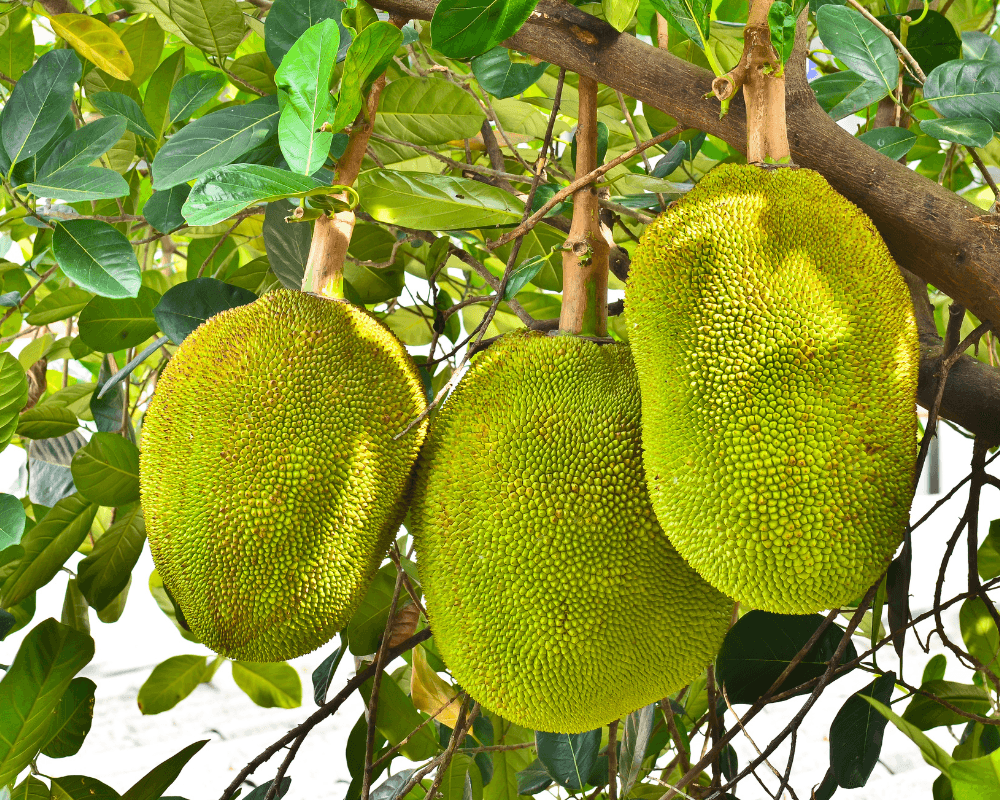
The first time you see a jackfruit, even in a picture, it’s hard to believe that such a giant fruit grows all on its own. It needs no watering, no pesticides and almost no help from people. In the tropics of Sri Lanka, it grows on trees that are like a small world of their own. Under their leaves, there is shade, damp air and lots of life, and jackfruit gives all of it room. In this article, we travel to where the world’s largest fruit is born. We’ll also see why people call it a crop of the future that can help the planet as much as our plates.
Where does jackfruit grow best?
Jackfruit comes from the tropics. The air there is damp, the soil is warm all year, and rain comes often. It grows best in Sri Lanka, Indonesia and other tropical areas, where short dry spells take turns with heavy monsoon rains.
There, jackfruit trees don’t grow on big plantations. They grow in mixed forest areas and small gardens next to other crops, like mango, tea, pineapple and banana plants. The land is a living ecosystem, not just one crop. This gives the trees natural shade, shelter and a local climate that helps them grow steadily.
What does a jackfruit tree need to grow?
How can jackfruit grow to dozens of kilograms without much care? The secret is that it is very tough. All the tree needs is rain, warm air and plenty of space. It doesn’t need watering systems, chemical sprays or rich soil. Things we think are a must elsewhere just aren’t needed here.
Tropical soil has little humus, and nutrients don’t stay in it for long, because plants use them up almost right away. European farmers would see this as a problem. But jackfruit is perfectly suited to it. It grows slowly but steadily and takes its energy from nature around it, without help from people. That makes growing it gentle and sustainable, and kind to the soil and the ecosystem.
How does jackfruit grow, step by step?
Jackfruit might look like a fruit that needs special care. But the truth is the opposite. It grows slowly and steadily, and nature guides almost all of it. Farmers mostly just follow what the trees do.
What is its path from seed to first harvest?
1–3 years: the tree puts down roots and builds a strong trunk. At this stage, it mostly needs peace, warmth and rain.
3–5 years: the first fruits appear. They are small and uneven, but there are lots of them.
5–10 years: jackfruit enters its most productive time. It can give dozens to hundreds of fruits a year.
Over 10 years: older trees are strong and steady. They are often the most valuable thing a farmer has.
What’s most interesting about growing it? Jackfruit doesn’t come from large plantations.
You’ll find jackfruit trees:
in forest areas,
in small family gardens,
on mixed farm plots among mango trees, tea bushes and coconut palms.
This makes growing jackfruit special. Instead of harming the land, it is a natural part of it.
Why is jackfruit one of the most sustainable crops in the world?
When you hear “the world’s largest fruit”, you might not expect it to be one of the gentlest ways to grow food. But it is.
It needs almost nothing extra
it grows without watering systems,
it doesn’t need pesticides, weed killers or artificial fertilisers,
it doesn’t need much care or help from people.
It lives on tropical rain, sunshine and the nutrients that nature recycles again and again.
It protects the soil and the whole ecosystem
Crops grown on their own in huge fields can harm the land. Jackfruit supports the natural balance around it:
it gives shade to other plants,
it gives shelter to small animals,
it helps keep the soil from drying out,
it doesn’t upset the natural cycle of nutrients.
Growing it just adds to what tropical nature already knows how to do.
Does jackfruit have a low carbon footprint?
Yes. Here’s an amazing number: jackfruit makes only 0.9 kg of CO₂ per kilogram of food.
For comparison: beef makes about 24 kg of CO₂ per kilogram.
The difference is huge. It shows why jackfruit is seen as a crop of the future.
Is any of the jackfruit wasted?
Hardly any. One of the biggest plus points of jackfruit is that almost all of it gets used:
The flesh goes to kitchens and food production.
The skins and scraps are turned into compost rich in minerals and fibre.
This compost puts nutrients back into the soil, where other crops grow.
It’s a simple system, and it works really well.
Thanks to it, local farmers:
keep their soil rich,
cut waste,
don’t need fertilisers from outside that would harm the soil.
So jackfruit is a perfect example of circular farming, with very little waste and lots given back to nature.
Who grows our jackfruit, and is it fair?
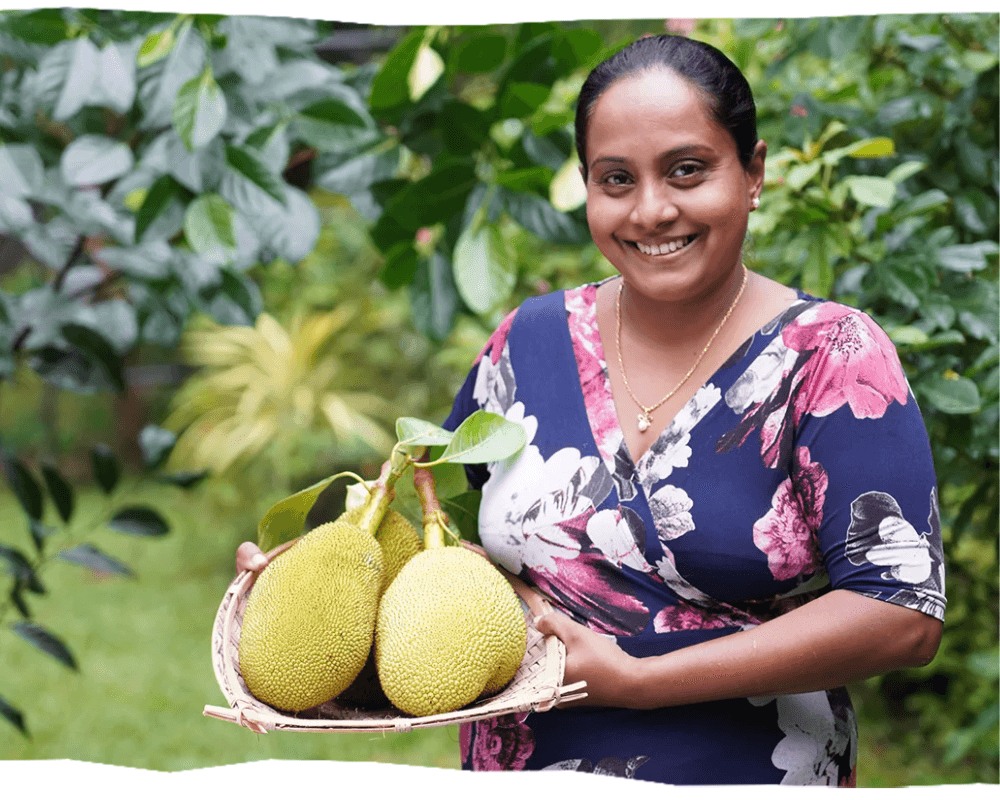
Behind every jackfruit, there is not just a tree but also the people who care for it. In Sri Lanka, these are mostly small farmers and their families. For them, jackfruit is an important part of their land and culture. That’s why the way it is grown follows one simple rule: food should be good for us, and also for the people who grow it.
What does this mean in real life?
Fairtrade rules: farmers get fair conditions and set prices, so they know their work has steady value.
Community support: growing jackfruit isn’t lonely work. Whole families and neighbours take part, share what they know and help each other during the season.
Learning and training: farmers learn modern ways of growing, so they can grow more and protect their crops from climate change.
Social projects: every year, the communities help the people who need it most. One of the nicest examples is building a house for a family that has no home.
All this creates food that tastes great and has a story that matters. When we choose jackfruit, we support real people, not a faceless system.
Why is jackfruit called a crop of the future?
It’s no accident that scientists call jackfruit a “future food”, the food of the future. Extreme weather is making grain and wheat harvests less certain. Jackfruit shows that some crops can adapt.
Why does it matter so much?
It handles climate change really well: it can take high heat, long droughts and heavy rain.
It grows where other crops fail: it doesn’t need good soil or tricky care, so it is a steady source of food even in hard places.
It is healthy and versatile: young, stringy jackfruit can replace meat, and ripe, sweet jackfruit is eaten as fruit. It depends on when it’s picked.
It is kind to the planet: it almost grows by itself, with just rain and tropical sun.
That’s why people say it could one day help replace some foods that depend on a stable climate.
From tree to plate
Jackfruit isn’t just the world’s largest fruit. It’s a story that shows food can grow in a way that is good for our plates and for the whole planet. It grows in the rich, varied tropics, among lots of life, on trees that protect the soil and the ecosystem. It is grown by people who see it as the future of their community. And thanks to gentle farming, it is one of the most sustainable crops today.
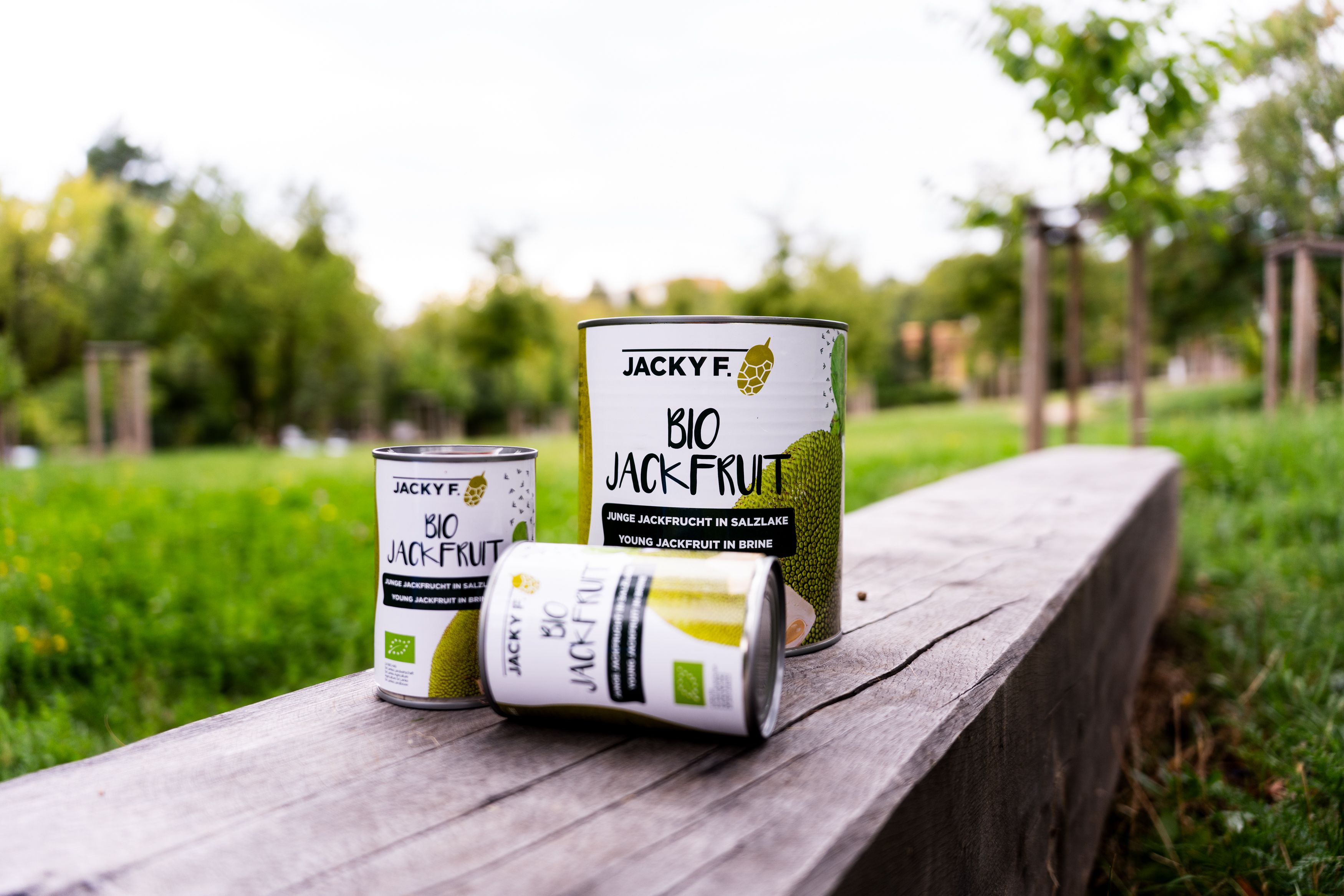
When young jackfruit reaches us at Jackies, we love turning it into tasty, high-quality products that give you just the right dose of plant-based energy. Want to get to know jackfruit beyond the story of how it grows? Take a look at our range. It’s waiting for you in its tastiest form.
Author: Ing. Kateřina Jakešová, nutrition specialist and copywriter
Quick facts: how jackfruit grows
Where does jackfruit grow?
It grows in the tropics, mainly in Sri Lanka, Indonesia and other warm, rainy places.
How long does a jackfruit tree take to give fruit?
The first fruits appear after 3–5 years. The best harvests come after 5–10 years.
Does jackfruit need pesticides or watering?
No. It grows with just rain and sun, without pesticides, weed killers or artificial fertilisers.
What is the carbon footprint of jackfruit?
About 0.9 kg of CO₂ per kg, compared with about 24 kg for beef.